Surge Protection Explained: Safeguarding Your Home or Business Electronics
Every home and business depends on electronics. Phones, computers, appliances, and security systems keep us connected and secure. But in a flash—literally—a power surge can wipe out thousands of dollars’ worth of equipment. That’s not just inconvenient. It’s a gut punch.
At Powells Electric, we’ve seen first-hand what a surge can do. As a 24/7 emergency electrician, we know the stakes are high. Whether you’re protecting your home or a busy workplace, understanding surge protection is more than a smart move—it’s essential.
What Causes Power Surges? ⚡
Think of your electrical system as a stream. Most of the time, water flows smoothly. But sometimes, a sudden rush barrels through—overflowing the banks and leaving chaos behind. That’s a power surge.
Common surge triggers:
- Lightning strikes: A bolt near your building can send a shockwave through wiring, even if it never hits the structure.
- Downed power lines: Utility grid issues, accidents, or storms can send unexpected jolts into your system.
- High-powered equipment: Large machines or HVAC units turning on and off cause brief spikes—think of them as electrical hiccups.
- Faulty wiring or outdated panels: Old or damaged circuits can’t always handle today’s demand, making surges more likely.
- Utility switching: Sometimes, the local grid transfers power or restores service after an outage, causing surges.
Surges are unpredictable. Some are tiny and go unnoticed, quietly chipping away at your devices. Others strike hard and fast, frying electronics in an instant. That’s why having reliable surge protection isn’t a luxury—it’s a shield.
Types of Surge Protection (Point-of-Use vs. Whole Property)
Choosing surge protection is a bit like deciding between a raincoat and a sturdy roof. Both keep you dry, but the coverage is very different.
Point-of-Use Surge Protectors
These are the familiar power strips with built-in protection. Plug your computer, TV, or gaming console into one, and minor surges get absorbed before they reach your device.
Pros:
- Affordable and widely available.
- Easy to install—just plug and go.
Cons:
- Only protects what’s plugged into it.
- Won’t defend against major surges from lightning or direct hits to your panel.
Whole Property Surge Protection
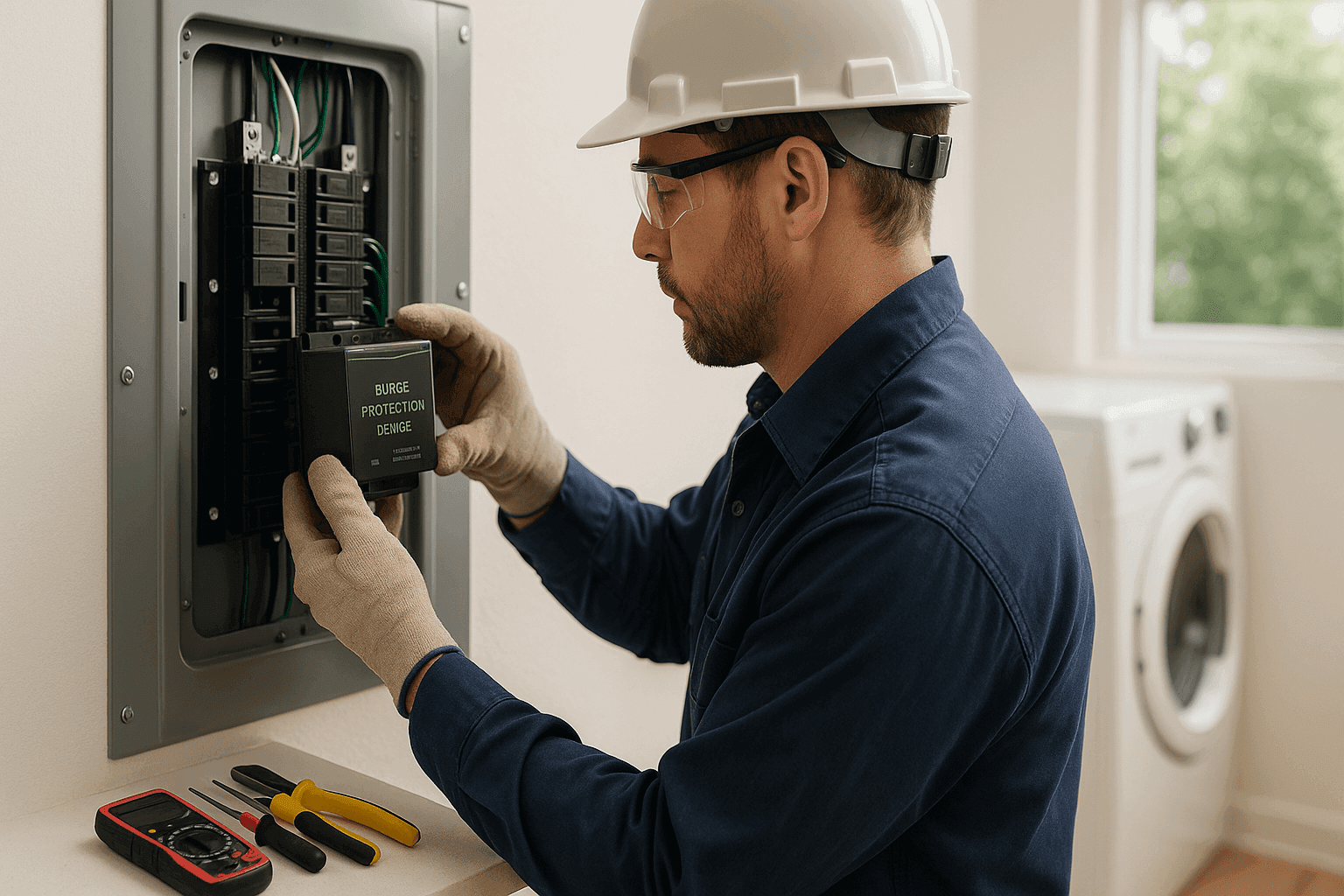
Installed at your main electrical panel, these devices act as a gatekeeper for your entire home or business. Any surge entering the building—no matter the source—gets filtered or blocked before it can wreak havoc.
Pros:
- Protects all outlets, appliances, and hardwired systems.
- Handles large surges that strips can’t.
Cons:
- Requires professional installation.
- Higher upfront cost, but broader coverage.
For the best results, many electricians recommend a layered approach—whole property protection for big threats, plus point-of-use devices for sensitive electronics.
Benefits for Homes and Businesses
Surge protection isn’t just about saving your TV. It’s about peace of mind—knowing you’re not a lightning strike away from disaster.
Why bother?
- Protect valuable electronics: Computers, smart appliances, alarm systems, and industrial equipment all depend on stable power.
- Prevent business downtime: For commercial spaces, a surge can halt operations. Lost sales, missed deadlines, and angry customers follow.
- Avoid costly repairs: Replacing fried systems is expensive. Insurance may not cover all surge damage, especially for neglected systems.
- Comply with safety codes: The National Electrical Code (NEC) now recommends surge protection for new installations. It’s not just smart—it’s best practice.
Think of surge protection as an insurance policy for your wiring. It’s a small investment that could save you thousands.
How to Choose and Install Surge Protectors
Not all surge protectors are created equal. Here’s how to pick the right one for your needs.
- Check the rating: Look for the UL 1449 mark. This means the device meets industry safety standards.
- Joule rating matters: Higher joules = more protection. For homes, aim for at least 600-1000 joules. Commercial spaces may need even more.
- Clamping voltage: This is the voltage level where the protector activates. Lower is better—look for 400V or less.
- Response time: Faster is safer. Quality surge protectors respond in nanoseconds.
- Right fit: Make sure the protector matches your panel’s voltage and amperage.
Professional installation is key. Whole property protectors connect directly to your main panel. That’s not a DIY project—it’s a job for a licensed emergency electrician. If you’re searching “Electrical System Installation near you,” always ask about surge protection as part of the package.
Maintenance and Seasonal Tips (Storm Prep) 🌩️
Good surge protection isn’t “set and forget.” Keep it working with these tips:
- Test regularly: Some devices have indicator lights—if it’s off, the protector may need replacing.
- Replace after big hits: After a major surge or lightning strike, have your system checked. Protection devices can wear out.
- Seasonal check-ups: Before storm season, schedule an electrical safety inspection with a pro. This is especially important if you live in an area prone to severe weather.
- Unplug when possible: During intense storms, unplug sensitive devices if you can. It’s an old-school tip, but still effective.
Practical Tips for Surge Protection
- Don’t daisy-chain power strips. It increases risk and can overload circuits.
- Mount point-of-use protectors off the floor to avoid water damage.
- For businesses with mission-critical equipment, consider backup generators with built-in surge protection.
- Document your electronics and keep receipts—helpful if you ever need to file an insurance claim.
When Should You Call a Pro?
If you notice flickering lights, frequent breaker trips, or burnt smells near outlets—act fast. These are signs of wiring issues or repeated surges. Emergency electricians like Powells Electric handle everything from troubleshooting to full electrical system installation near you, 24/7.
Remember: Surge protection is safest and most effective when installed and maintained by a licensed electrician. That’s especially true for whole property and commercial solutions.
Frequently Asked Questions
Q: Do surge protectors last forever?
A: No. Most wear out after taking several big hits. Replace every 2–5 years, or sooner after a major surge.
Q: Can I use surge protectors in the garage or outdoors?
A: Yes, but only use models rated for outdoor/weatherproof use. Indoor strips won’t last outside.
Q: Is surge protection required by code?
A: The NEC recommends it for new homes and major panel upgrades. Always check local requirements.
Q: Will a surge protector save my electronics from a direct lightning strike?
A: No device offers 100% protection from a direct hit. But whole property protectors greatly reduce the risk of damage from nearby strikes.
Local and Seasonal Considerations
Storm season brings a higher risk of power surges. If your area is prone to lightning or frequent outages, take extra precautions. Schedule an inspection before severe weather arrives. Businesses with heavy machinery should consider regular safety checks and surge protection upgrades.
Don’t let a surge catch you off guard. Whether you’re a homeowner or run a busy workspace, Powells Electric is ready to help—day or night.
Call Powells Electric now — or reach us anytime at 855-578-5053 .